
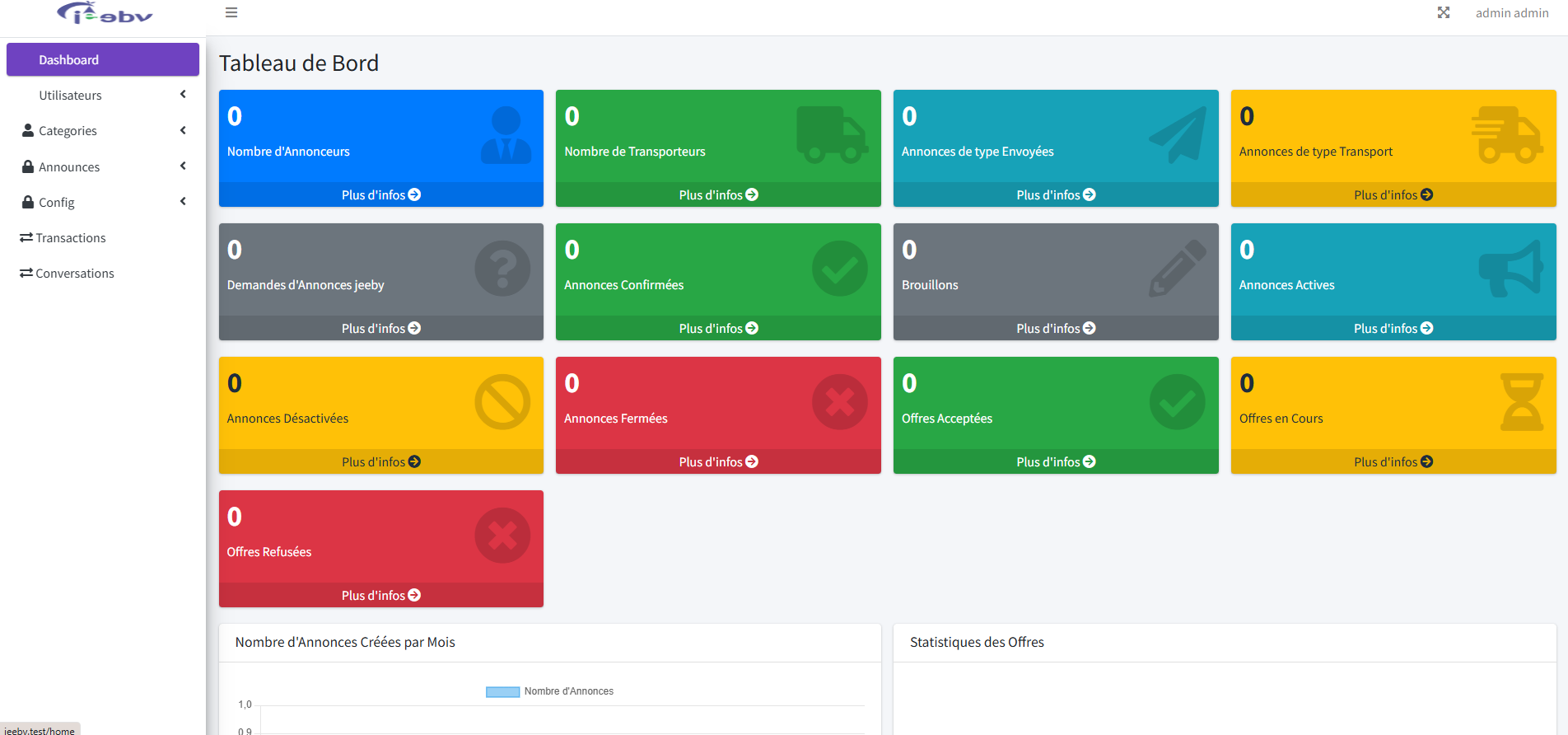
 Laravel / API dashboard · Jeeby
A mobile application can look simple when you only see its screens. Most of the decisions that determine reliability, however, live in the backend: data, authentication, business rules, statuses, payments, notifications and the ability to diagnose incidents.
When the product must evolve, that layer becomes even more important.
Keep business logic out of the interface
The mobile app should not be the only place where critical rules live. Calculations, permissions, status transitions and important validations should remain controlled by the backend.
This lets several interfaces use the same logic: mobile application, admin dashboard, partner portal or external integration.
The API becomes a contract between interfaces and the business system.
Treat authentication as a complete workflow
JWT, OTP or classic authentication are not only login mechanisms. A production product also needs token renewal, email verification, password recovery, logout, account deletion and profile-based permissions.
A clear architecture avoids scattering exceptions across controllers.
Centralize business rules
In a marketplace or transactional product, multiple domains interact: products, availability, cart, orders, payments, messaging and notifications.
They should not become a collection of unrelated routes. Services, statuses and validations must remain coherent so an action from the mobile app produces the same result as an action from the back office.
Payments require intermediate states
A payment is not always immediately successful or failed. It may require an additional action, be cancelled, refunded or confirmed asynchronously.
Stripe or PayPal integration therefore needs to be connected to the product workflow. Financial status and operational status should not be treated as the same thing.
The back office is part of the product
An application without operational tooling becomes difficult to maintain. Teams need to inspect users, orders, payments, conversations, errors and business states without accessing the database directly.
A useful dashboard can also support exceptional corrections and make incidents understandable before code is opened.
Logs, notifications and observability
When an API serves multiple interfaces, exchanges need to be traceable. Structured logs make failures easier to diagnose, while notifications should respect user preferences and business context.
The goal is not to log everything. It is to keep the information required to operate the system effectively.
Prepare for future evolution
A backend should expect the product to change: new roles, payment methods, availability rules, partners or interfaces.
That requires enough structure so each new feature does not force uncontrolled changes across the codebase.
Nomadia illustrates this approach: Laravel backend, web dashboard, REST API, authentication, products, rentals, payments, messaging, notifications and operational tooling share the same business logic.